Reveal what images contain
Generate titles, descriptions, categories, detected objects, and visual information that make large collections easier to interpret and search.

VisioClarity gives archives a way to reveal the people, places, objects, visual patterns, and historical context held inside large image collections, without waiting for every asset to be manually rediscovered first.
Digitization can make an archive larger overnight, but not necessarily more accessible. When identification, description, provenance, and rights context lag behind the images, the collection remains visually rich but operationally opaque.
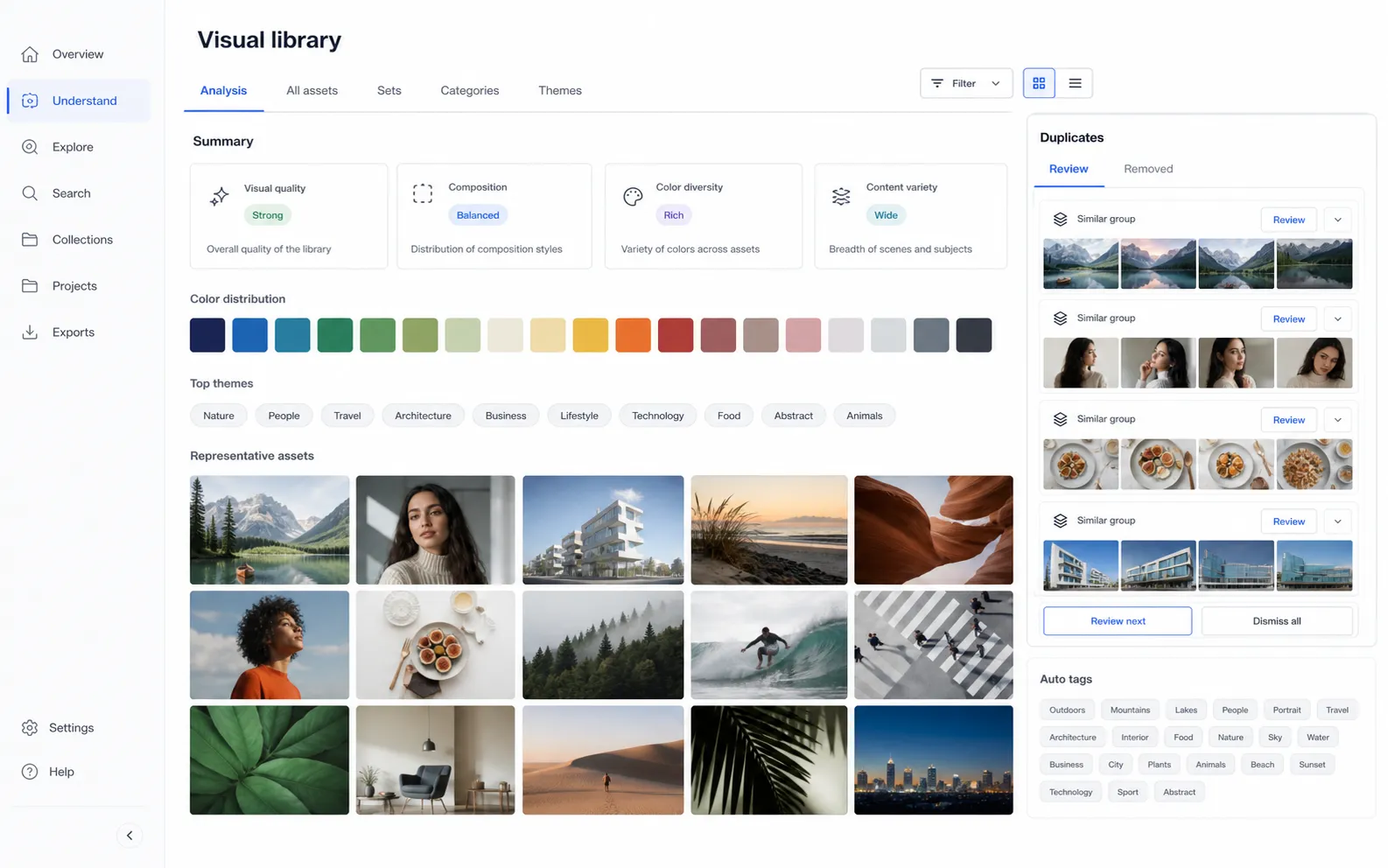
VisioClarity brings automated visual intelligence together with metadata adapted to archival practice. Ready-to-use archival templates provide a practical starting point for cataloging, while each institution can adapt the structure to its own collection and preserve the careful human context that gives historical material its meaning.
Generate titles, descriptions, categories, detected objects, and visual information that make large collections easier to interpret and search.
Start with a ready-to-use archival template and fields such as catalog number, creator, title, date, period, place, subject, description, collection, and source. Add reusable Historical Context, Preservation & Conservation, and Rights & Usage groups, then adapt Custom Fields for provenance, original medium, condition, access, and digitization needs.
Search by meaning, image reference, multilingual text, metadata, and facets across the information represented in the collection.
Understand visual composition, technical characteristics, categories, detected objects, recognized people, and operational patterns at collection or workspace level.
This is not about replacing archival expertise. It is about giving that expertise a far stronger foundation: a library that can be explored, searched, understood, and enriched without forcing manual work to be the only path to access.
Understand the visual, technical, descriptive, and semantic information inside an image collection.
Explore visual intelligenceOrganize archival assets with adaptable metadata, folders, licenses, and access segmentation.
Explore asset managementStart building a more understandable, searchable, and manageable image library.